Can recycled fine sand be used for paving and screeding?
July 24, 2026|News
If you’re working on a project such as paving, screeding, or utility trench backfilling, we would highly recommend recycled fine sand.
If you’re not an expert on your sands, fine sand differs from grit and fill sand as the granules are slightly smaller. This gives fine sand a smooth texture and a workability that makes it perfectly suited to the tasks mentioned above.
It’s also important to remember the environmental benefits of working with recycling materials, including reducing landfill waste and contributing towards a circular economy.
Introducing recycled fine sand
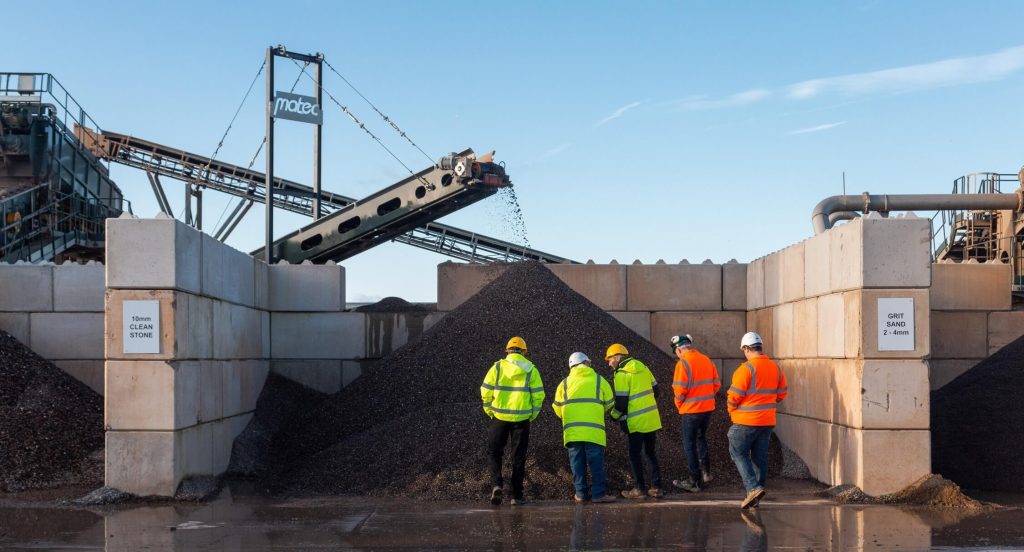
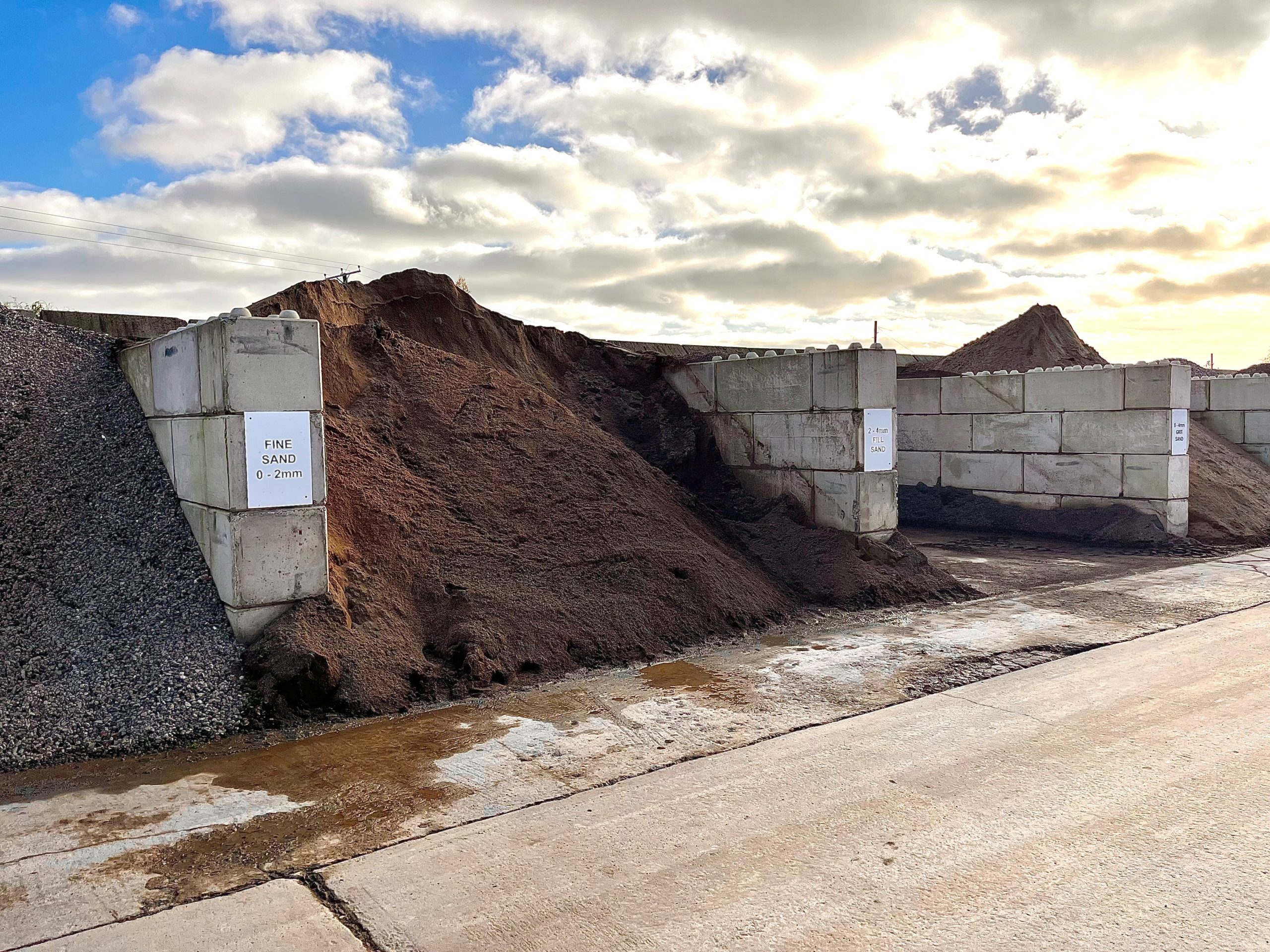
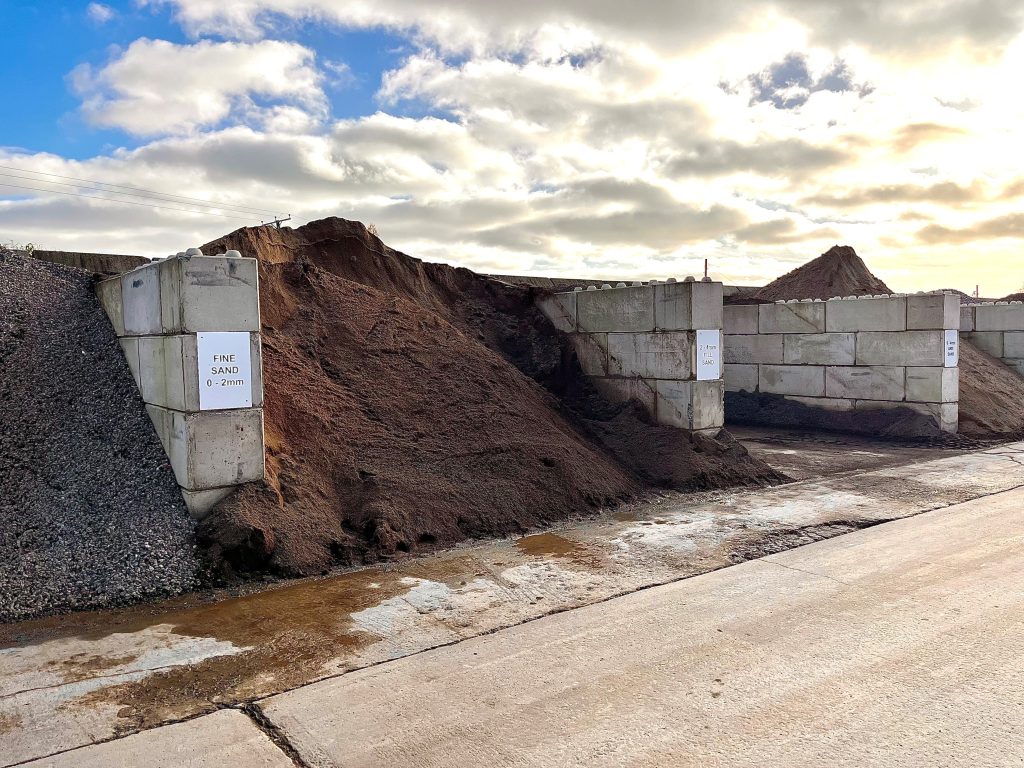
Recycled fine sand is produced by processing construction and demolition waste, crushed concrete, reclaimed aggregates and other inert materials, through our specialist, in-house machinery to produce sand with a particle size of 0-2mm. The result is a fine-textured, general-purpose sand with smaller particles that behave consistently across a broad range of construction applications.
Unlike natural sand sourced directly from rivers or pits, recycled fine sand is recovered and reprocessed from existing waste streams. This makes it a genuinely sustainable alternative to virgin materials, reducing the demand for quarried resources and diverting waste from landfill.
It is commonly used across:
- Paving and block paving
- Screeding and bedding layers
- Mortar and brick laying
- Road construction and drainage systems
- Decorative finishes
We noticed in a recent report from the Mineral Products Association that the construction industry in the UK uses around a staggering 180 million tonnes of aggregates each year.
Using recycled alternatives wherever possible makes a significant difference to the industry’s overall environmental footprint.
What is fine sand suitable for?
Fine sand’s small grain size and fine texture make it a versatile material across a number of construction projects. Here is a look at where it performs best.
Paving and block paving
Fine sand is widely used as a bedding and jointing material for paving slabs and block paving. Its smaller particles allow it to fill gaps cleanly and compact well under load, providing a stable and level surface. This helps to prevent movement under foot, and in some cases can fix creaking.
Screeding
For floor screeding, the process of applying a smooth layer of material above a structural base, fine sand is an excellent choice. It blends well with a cement base, creating a smooth, workable mix that levels easily and cures to a firm surface. Its consistent particle size supports surface smoothness and reduces the risk of weak spots in the finished screed.
Mortar and masonry
Find sand is often used in mortar mixes, especially for brick laying and block laying. It’s often chosen by tradespeople because of tis fine texture, which in turn allows the mix to bond well and spread evenly. This is particularly important in maintaining consistent joint thickness.
Road construction
In road construction, fine sand is used as part of sub-base and bedding layers. It complies with SHW: Series 500 drainage requirements, making it suitable for use in drainage systems beneath road surfaces where consistent particle distribution is critical.
Decorative finishes
In landscaping and decorative applications, fine sand provides a smooth, clean finish. Its fine grain size makes it suitable for filling joints in ornamental paving and for use in render mixes where surface appearance matters.
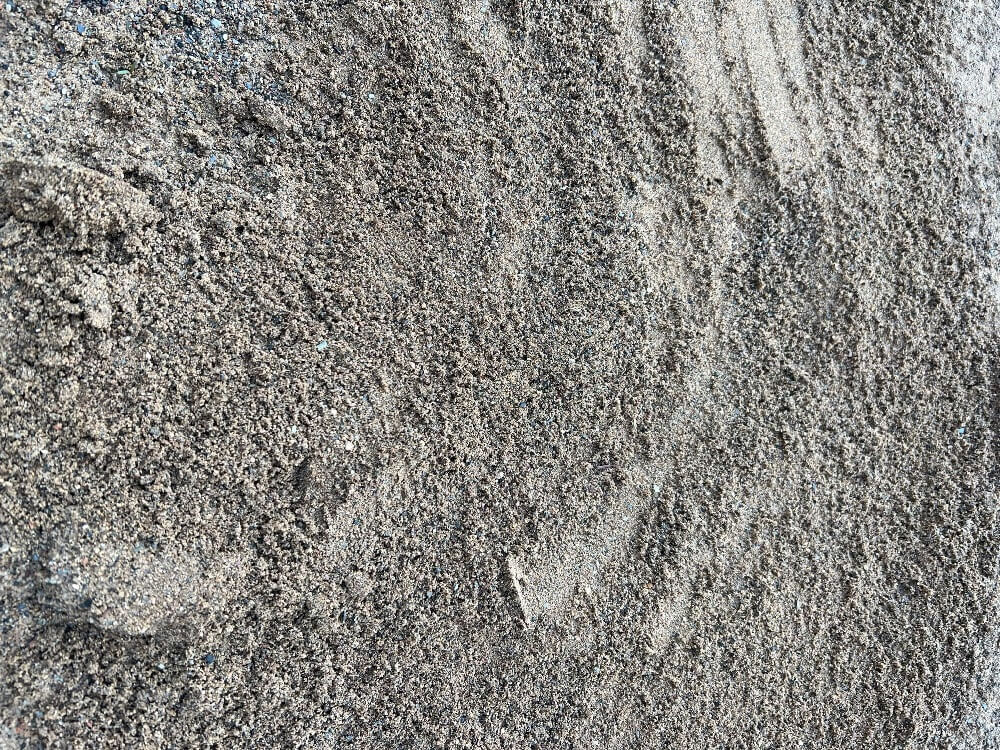
How does recycled fine sand compare to other forms of sand in construction?
A lot of people understandably view all types of sand as the same. There are indeed differences, which this table aims to outline.
| Sand type | Description | Best used for | Key benefit |
| Fine sand (0-2mm) | Small particles with a fine texture and consistent grain size | Screeding, paving, mortar, masonry, drainage | Excellent surface smoothness and workability |
| Grit sand / sharp sand (2-4mm) | Coarse sand with a rough texture and larger grains | Trench backfill, bedding layers, concrete mixes | High strength and structural stability |
| Fill sand (2-4mm) | Coarse, semi-angular particles used for bulk filling | Trench bark filling, sub-base bedding, drainage systems | Cost-effective backfill material for large volumes |
To choose the right sand for your job, we always recommend knowing which particle size suits you best, and then aligning this with your intended use. As a rule of thumb, fine sand is generally best suited to applications where the finish and workability matter most. In contrast, grit and fill sands are usually a better fit for structural concrete, foundations and drainage work where larger grains provide the necessary load-bearing capacity.
If you’re unsure of which to use for your project, feel free to get in touch with the team and we’ll do our best to assist.
Is recycled fine sand as good as natural sand?
Yes. Recycled fine sand that has been properly processed and tested performs comparably to natural sand for most general construction uses. It undergoes regular grading analysis and, where it meets relevant British Standards, can be used confidently in screeding, paving and mortar applications.
It also far better from an environmental standpoint, which we’ll explain in more depth below, and as a result is a great way to help your company meet any sustainability goals you may have in place.
What are the benefits of using recycled materials?
Reducing landfill waste
Every tonne of recycled fine sand used in construction is a tonne of waste that does not go to landfill. Across large construction projects, those savings add up quickly. Using recycled aggregates supports the construction industry’s broader responsibility to manage waste more sustainably.
Lower carbon footprint
Sourcing virgin natural sand, whether pit sand or river sand, requires extraction, processing and transportation. Recycled sand, produced from existing waste streams at local processing facilities, carries a significantly lower carbon footprint. For contractors working to meet sustainability targets, this matters.
Compliance with circular economy goals
Using recycled materials directly supports the UK’s circular economy objectives, keeping materials in use for as long as possible rather than discarding them after a single application. For businesses working on projects that require environmental reporting or planning conditions around sustainable construction, this is an increasingly important consideration.
No compromise on quality
Recycled fine sand is not a lower-grade alternative. When produced correctly and tested to British Standards, it meets the same performance requirements as virgin materials. Quality does not have to be sacrificed in the pursuit of sustainability.
Recycled fine sand from Towens
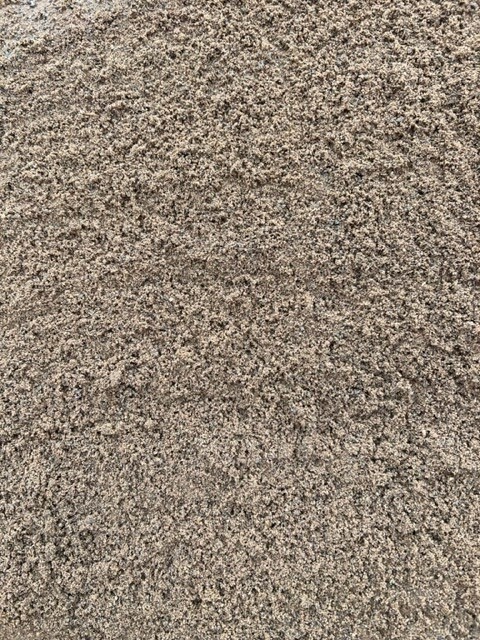
At Towens, we produce high-quality 0-2mm fine sand at our processing plant in Westonzoyland, Somerset. It is a general-purpose sand made up of small particles up to 2mm and is analysed for particle size distribution on a monthly basis.
Our fine sand passes:
- SHW: Series 500: Drainage grading requirements
- BS EN 12620: Concrete grading requirements
- BS EN 13232: Unbound and hydraulically bound materials for civil engineering works and road construction
It is suitable for mortar, brick laying, block laying, paving and screeding, and all batches undergo rigorous quality checks before leaving our site.
We also supply:
- 0-4mm grit sand: A versatile option for mixed construction applications
- 2-4mm fill sand: A coarse sand ideal for trench filling and bedding layers
How to get your fine sand from Towens:
- Delivery: we can deliver direct to your site across the South West using our fleet of 8-wheel tippers and skip lorries
- Collection: You’re also welcome to collect from our Westonzoyland site in a dumpy bag or on your own service vehicle; material can also be supplied loose
For more information, contact us at tippers@towens.co.uk or call us on 01934 424242 and ask for Tippers.
Who are Towens?
We are a family-owned recycling, waste management, haulage and environmental services business based in Weston-super-Mare, with depots and processing facilities across Somerset and the South West of England. With over 30 years of experience, we handle well over a million tonnes of waste and recycled aggregates every year.
Our four recycling facilities and fleet of over 40 tippers, artics and skip lorries allow us to transport and process soils, aggregates and construction waste efficiently and responsibly. We are proud to say that 92% of the material processed through our facilities is recycled, reused or recovered, with just 8% going to landfill, which reflects our ongoing commitment to sustainability. We’re doing everything we can to lower this number even further.
We work with customers ranging from nuclear power plants and major civil engineering contractors to local builders, landscapers and homeowners across Somerset and the wider South West.
Our services include:
- Waste management and recycling
- Skip hire
- Aggregate and soil supply
- Tipper and grab hire
- Plant hire (excavators, screeners, crushers and more)
- Civils and demolition
Everything we do is designed to help our customers reduce the carbon footprint associated with waste disposal, benefiting both the local community and the environment.
Get in touch:
01934 424242
skips@towens.co.uk | tippers@towens.co.uk
Or fill out our online enquiry form right here
Thank you for reading!